Making the transition from military to civilian life is rarely simple. After years of structured routines, clear roles, and mission-focused teams, many veterans face culture shock when they enter the civilian job market. As a mentor, you can make that transition smoother and dramatically improve a veteran’s chances of success. Here are five concrete things every mentor must do.

Related post: 5 Things Veterans Say Their Mentors Got Wrong—And How to Fix It
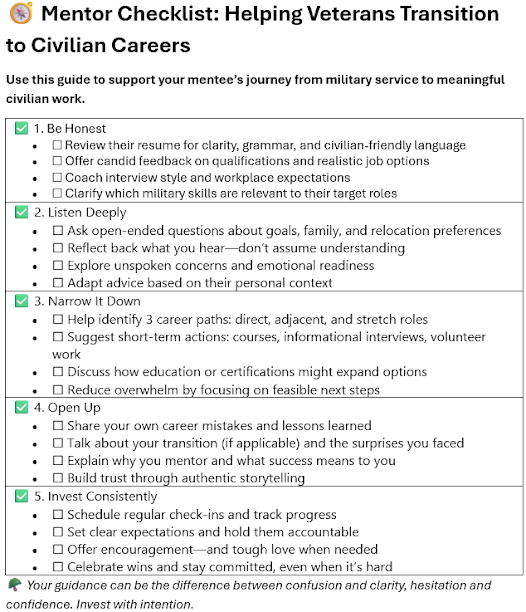
1. Be Honest
Veterans arrive with highly variable education and experience. Be candid about how their qualifications match the civilian roles they want. If additional training or a credential will meaningfully expand their options, say so – and suggest realistic next steps.
- Give clear feedback on resumes and cover letters (grammar, clarity, civilianized job descriptions).
- Coach interview style using concrete examples and mock questions.
- Translate military skills into civilian terms (leadership, logistics, project management) instead of assuming employers understand MOS codes.
Honesty delivered with respect builds trust and shortens the learning curve.
2. Listen Deeply
What veterans say and what they leave unsaid both matter. Don’t assume communication has happened – ask targeted questions and reflect back what you hear.
- Ask about family obligations, relocation openness, salary needs, and long-term goals.
- Probe how they want the work-life balance to look after service.
- Use silence and paraphrase to surface hidden concerns.
The better you understand their priorities, the better you can recommend roles and locations that fit real life, not just aspirations.
3. Help Them Narrow Options
Civilian careers are wide and sometimes bewildering. Help your mentee map realistic paths.
- Start with transferable strengths and realistic constraints (education, certifications, family).
- Create 3 feasible career options: “directly related,” “adjacent,” and “stretch” roles.
- Suggest short, practical actions for each path: informational interviews, short courses, or volunteer work to test fit.
A focused plan reduces overwhelm and turns vague ambition into actionable steps.
4. Open Up
Reciprocity builds credibility. Share your own failures, surprises, and learning moments – especially if you’ve navigated a similar transition.
- Tell one quick story about a mistake and what you learned.
- Describe concrete decisions you wish you’d made sooner.
- Explain why you mentor and what success looks like to you.
Authentic sharing humanizes the relationship and gives mentees a clearer sense of what to expect.
5. Invest Consistently
Mentoring matters most when you make it intentional. Show up, set expectations, and hold the mentee accountable. Key behaviors of mentors who invest:
- Regular check-ins and measurable milestones.
- Tough love when progress stalls and encouragement when it accelerates.
- High expectations plus practical support: introductions, referrals, and time for mock interviews.
Accept that not every pairing will flourish, but don’t exit prematurely. Your consistent effort is often the decisive factor in a veteran’s success.
Closing
If you mentor veterans, commit to these five actions this month: schedule a resume review, set one learning goal with a timeline, and arrange an informational interview for your mentee. Small, consistent investments multiply into lasting career outcomes.
🌠 Stay Connected, Keep Growing
If this post lit a spark in your night, there’s more to come.
Subscribe to receive gentle updates, moonlit guides, and soulful resources—crafted to help you earn, create, and thrive after dark.
Let your inbox be a place of possibility.
Let your evenings bloom with intention.
🦊 Subscribe now and be the first to receive more.
What’s Next?
- Subscribe for updates, behind-the-scenes, and early access to tools I discover
- Share this post if it resonated
- Comment below: Which of these will you try, if any? I’ll respond
Here’s to owning your space—and engineering your freedom, one gentle hour at a time.
With warmth,
Laureano Pires
The Thistlefox Corner

One comment on “5 Ways Mentors Can Empower Veterans to Thrive After Service”