The classic “cat stuck in a tree” moment isn’t just a cartoon gag — it’s a real‑world scenario many cat owners face. Cats are agile, athletic climbers, but their anatomy makes going up a tree far easier than coming down. Understanding why cats get stuck and how to help them safely can make all the difference.
Below, we’ll explore why cats climb trees, why they struggle to descend, and what you can do if you find a feline perched a little too high for comfort.
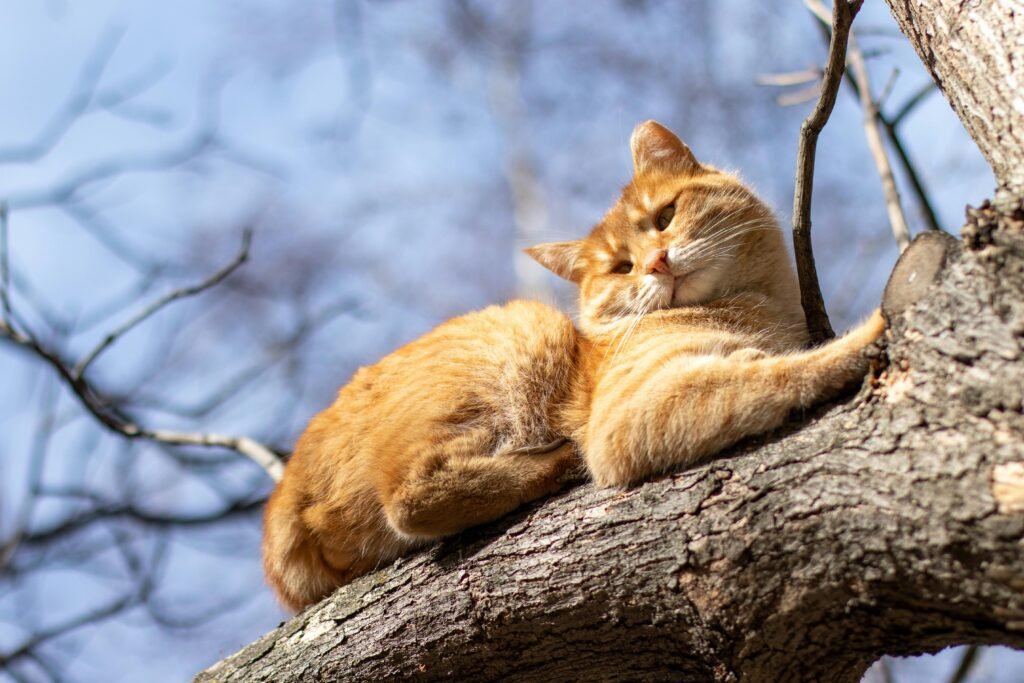
Why Do Cats Climb Trees?
Knowing why a cat went up the tree can help you determine the safest way to bring them back down. A cat that’s frightened behaves very differently from one that climbed up for fun.
1. Escape From Danger
Cats may be predators, but they’re also small enough to become prey. If chased by a dog, coyote, bobcat, or another threat, a tree becomes a quick escape route. Height gives them safety — but not always an easy exit.
2. Hunting Instincts
Cats are natural hunters. When they lock onto prey, such as a squirrel or a bird, instinct takes over. A fast chase can lead them straight up a trunk before they realize how high they’ve gone.
3. Curiosity and Play
Sometimes, a tree is simply an irresistible adventure. It offers height, stimulation, and a panoramic view of their territory — far more exciting than the cat tree by the window.
Why Do Cats Get Stuck in Trees?

Cats climb up using their curved, hook‑like claws, which are perfect for gripping bark and pulling themselves upward. But those same claws make climbing down tricky.
When descending, a cat must either:
- Back down the tree (like climbing down a ladder), or
- Turn face‑first and carefully inch downward, which is much harder due to the claw angle.
Because their claws curve backward, they’re built for upward traction — not downward braking. Young or inexperienced cats often panic or freeze because they haven’t yet learned the coordination required to descend safely.
With practice, most cats eventually figure it out. They may climb down slowly, back feet first, or jump once they feel close enough to the ground.
Also read: What Your Cat’s Sleeping Spot on You Really Means
What Should You Do If a Cat Gets Stuck in a Tree?
The most important first step: stay calm. Cats mirror human stress, and your anxiety can make them more fearful or cause them to climb even higher.
A Note About Collars
If your cat loves climbing trees, always use a breakaway collar. Regular collars can snag on branches and trap a cat, creating a dangerous situation. Breakaway collars release under pressure, preventing injury or strangulation.
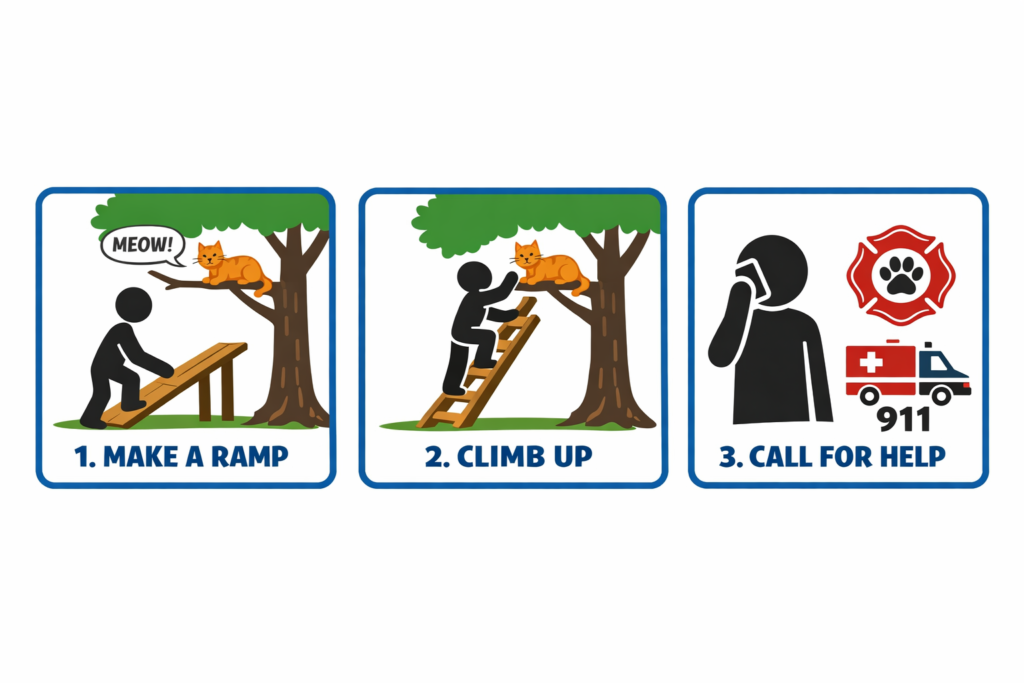
1. Create a Ramp
If the cat isn’t too high, you can lean a sturdy board or long object against the tree to form a ramp. This gives the cat a safe, gradual path downward. It works best for cats who are hesitant, not panicked.
2. Tempt Them Down
Food can be a powerful motivator — especially warm, aromatic foods like tuna, salmon, or their favorite wet food. You can also try:
- A favorite toy
- A treat bag shake
- Familiar sounds (like tapping their food bowl)
This method may not work if the cat is frightened, but it’s worth trying before more involved options.
3. Climb Up After Them (With Caution)
This is risky and should only be attempted if:
- You know the cat
- The cat is calm
- The tree can safely support your weight
- You’re confident using a ladder or climbing
If the cat is skittish, simply placing a ladder and stepping away may give them the confidence to climb down on their own.
4. Call for Professional Help
If the cat is very high, distressed, or unreachable, it’s time to call in experts. Options include:
- Arborists
- Utility workers
- Local animal rescue groups
- Fire departments (availability varies by region)
Professionals have the equipment and experience to safely retrieve cats.
Will a Scared Cat Eventually Come Down on Their Own?
Sometimes — but not always. A frightened cat may stay in the tree for hours or even longer, unable to rest, eat, or relax. Weather, exhaustion, and stress can quickly turn the situation dangerous.
Experts generally recommend not waiting more than a few hours before attempting a rescue.
Final Thoughts
Cats are excellent climbers, but their anatomy makes descending trees a challenge. While many cats eventually learn how to climb down, others may need help — especially if they’re scared or inexperienced.
If you find a cat stuck in a tree, stay calm, assess the situation, and choose the safest method to help. And when in doubt, calling a professional is always the most reliable option.
What’s Next?
If this post lit a spark in your night, there’s more to come.
- Subscribe to receive gentle updates, moonlit guides, and soulful resources
- Share this post if it resonated
- Please comment below: Has your cat run up a tree? Or, have you saved a cat from a tree? I’ll respond
Here’s to owning your space. Let your inbox be a place of possibility. Let your evenings bloom with intention.
With warmth,
Laureano S Pires
The Thistlefox Corner

3 Comments on “Why Cats Get Stuck in Trees — And How to Save Them”