Defining the experience of “matrescence.”
The statistics surrounding new motherhood are staggering. According to the Centers for Disease Control and Prevention, one in eight mothers experiences postpartum depression within the first year after delivery. Nearly one‑third of women develop a pelvic floor disorder at some point in their lives, often related to childbirth. Research also shows that up to 60% of postpartum women experience diastasis recti, a separation of the abdominal muscles after pregnancy.
Yet there is one challenge every mother faces — a universal transition that begins before or during pregnancy and continues long after birth. And the word for it isn’t even in most dictionaries:
Matrescence.
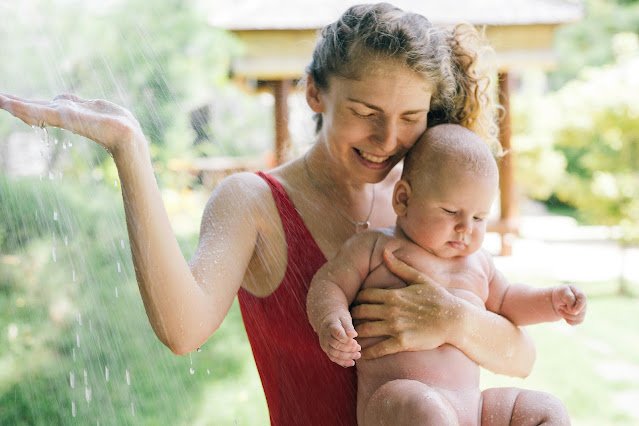
What Is Matrescence?
Matrescence refers to the physical, emotional, hormonal, and social transformation a person undergoes as they become a mother. The term was coined in the 1970s by medical anthropologist Dana Raphael, who also helped popularize the concept of the doula.
Unlike postpartum — which refers to a specific period after birth — matrescence is a developmental transition, similar in scope to adolescence. It can begin:
- during trying to conceive (TTC)
- throughout pregnancy
- during birth
- in the postpartum period
- and again when expanding a family
Every mother experiences matrescence, though each journey is unique.
The Science of Matrescence
Modern neuroscience has revealed that motherhood reshapes the brain in profound ways. Studies published in journals such as Nature Neuroscience and Frontiers in Psychology show:
- Gray matter reorganizes, decreasing in some regions while strengthening in others
- The amygdala enlarges, heightening emotional responsiveness and caregiving instincts
- Neural pathways rewire, supporting new patterns of thought, behavior, and identity
- Hormonal shifts during pregnancy and postpartum rival those of puberty and menopause
These changes are not signs of instability — they are signs of adaptation.
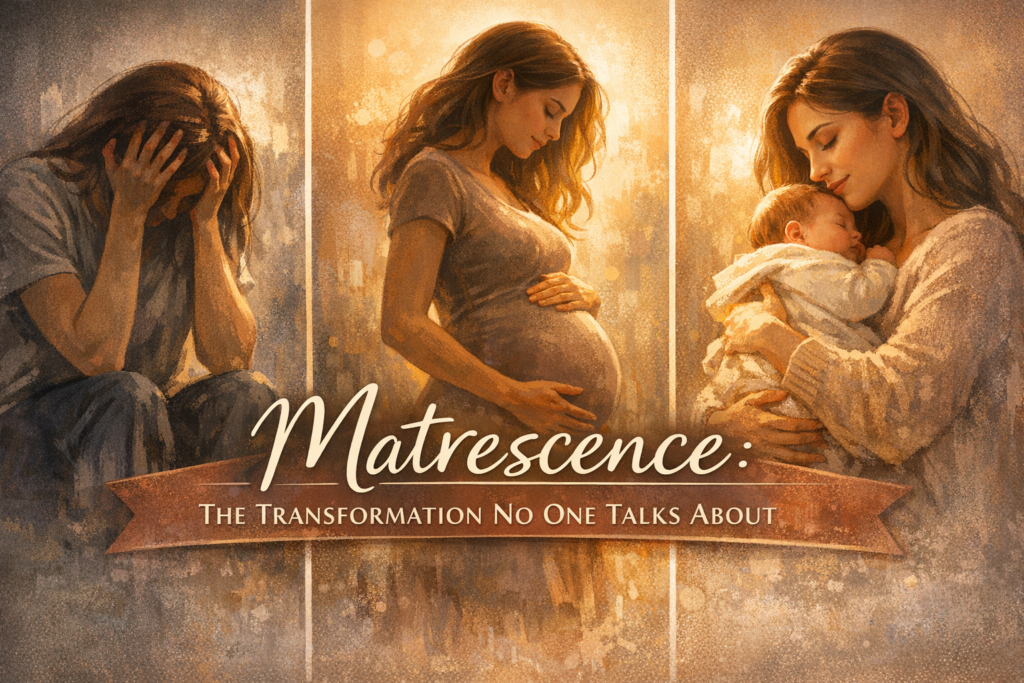
Why Matrescence Is Making Headlines
Recently, mom‑focused community app Peanut and parent‑care brand Tommee Tippee launched a campaign urging major lexicographers, including Merriam‑Webster, to officially add “matrescence” to the dictionary and stop flagging it as a misspelling.
Their mission: to address the cultural blind spot that has left generations of mothers without a word for one of the most significant transitions of their lives.
In a survey conducted by Peanut, 67% of mothers reported they had never heard the term.
Why Matrescence Matters
Motherhood is often portrayed in extremes: the blissful, glowing mother… or the mother in crisis with postpartum depression.
But most mothers live in the vast, unspoken middle — a place of mixed emotions, identity shifts, exhaustion, joy, grief, pride, and overwhelm.
Many describe feeling split between their “old self” and their emerging identity. They love their baby deeply, yet struggle with the magnitude of the change. Social media and parenting books rarely capture this tension.
Matrescence gives mothers permission to say:
“I love my baby, and this is still hard.”
Matrescence vs. the Postpartum Period
A deeper look at how they differ — and why the distinction matters
Although matrescence and the postpartum period overlap, they are not interchangeable.
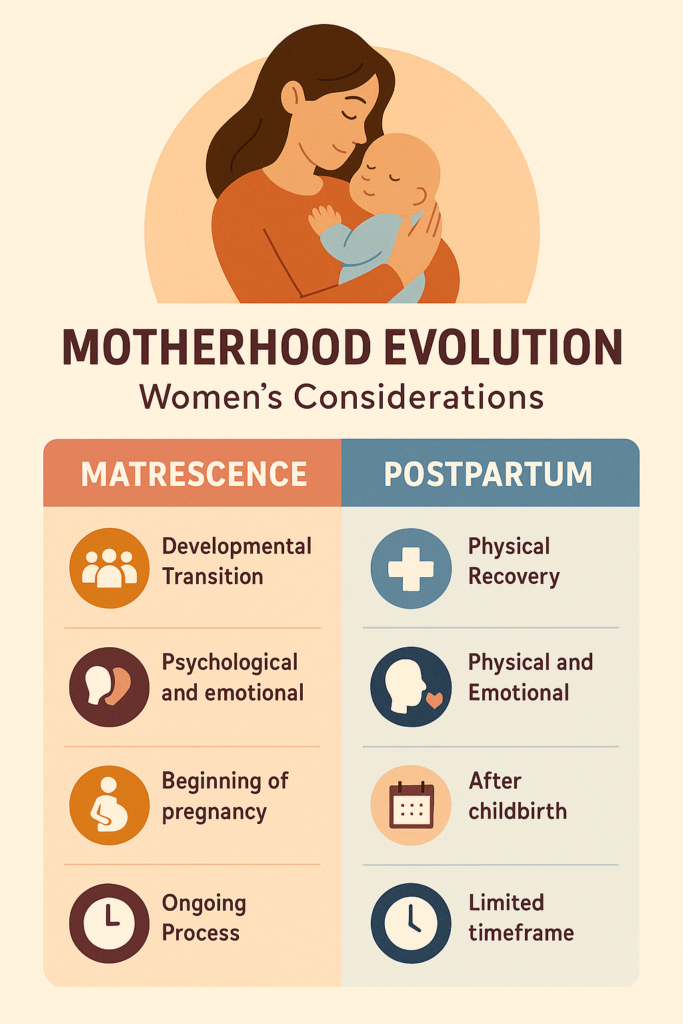
Matrescence
- A broad, ongoing transition into motherhood
- Begins as early as TTC and continues through pregnancy and beyond
- Involves identity, relationships, emotions, body changes, and social roles
- Not a medical condition
- Not inherently negative — it’s a developmental stage
Matrescence is to motherhood what adolescence is to adulthood: a complex, normal, transformative process.
The Postpartum Period
- A specific timeframe after birth
- Traditionally defined as the first 6–12 weeks, though many experts now consider postpartum to last a full year
- Focuses on physical recovery from pregnancy and childbirth
- Includes medical monitoring for complications
- Where conditions like postpartum depression, anxiety, or psychosis may emerge
How They Interact
- Matrescence includes the postpartum period but extends far beyond it
- A mother can be deep in matrescence without having postpartum depression
- Many mothers misinterpret the emotional turbulence of matrescence as a mental health disorder
Understanding the difference helps mothers know what is normal, what is treatable, and what deserves support.
Matrescence vs. Postpartum Depression
Matrescence is often confused with postpartum depression (PPD), but they are fundamentally different.
Matrescence
- A normal developmental transition
- Includes mixed emotions, identity shifts, overwhelm, and adjustment
- Does not impair daily functioning
Postpartum Depression
A medical condition that may include:
- persistent sadness or hopelessness
- inability to sleep even when the baby sleeps
- loss of appetite or overeating
- feeling slowed down or disconnected
- difficulty functioning day‑to‑day
For more information, see the CDC’s postpartum depression resources and Postpartum Support International.
If symptoms interfere with daily life or persist beyond two weeks, it’s important to reach out to a healthcare professional.
How to Cope With the Matrescence Transition
Reclaim small pieces of yourself
List the activities, rituals, or parts of your identity that mattered before motherhood — physical, relational, creative, spiritual — and reintroduce them gently.
Ask for support
Mothers of newborns often need to lean on partners, family, friends, or paid help to carve out moments of rest and self‑care.
Even small acts — a shower, a walk, a meal with your partner — can restore a sense of self.
Connect with other mothers.
Whether in your neighborhood, online, or within your family, shared stories reduce isolation and normalize the complexity of motherhood.
Why Talking About Matrescence Matters
Culturally, we expect new mothers to feel bliss above all else. But real motherhood includes joy, ambivalence, stress, love, grief, pride, and transformation.
The more openly we talk about matrescence, the less alone mothers will feel — and the more accurately we can honor the truth of becoming a mother.
What’s Next?
If this post lit a spark in your night, there’s more to come.
- Subscribe to receive gentle updates, moonlit guides, and soulful resources
- Share this post if it resonated
- Please comment below: Did you know what matrescence was? Have you, or does someone you know, have experienced it? I’ll respond
Here’s to owning your space. Let your inbox be a place of possibility. Let your evenings bloom with intention.
With warmth,
Laureano Pires
The Thistlefox Corner

Great article, thanks for sharing! For online speech to text I recommend MAI Transcribe 2: . MAI Transcribe 2
Solid write-up — learned a lot. Worth trying H3MaxAI — for 5–15s H3 Max clips. H3MaxAI
Nice perspective on the topic. You may find MiniMax H3 Video Generator useful — /. MiniMax H3 Video Generator