A facelift is one of those procedures wrapped in mystery, myth, and a whole lot of celebrity silence. People whisper about them, deny them, swear they’re “aging naturally,” and then show up with a jawline sharp enough to slice through marble.
So let’s talk about what a facelift actually is — the benefits, the risks, the costs, the recovery, and the uncomfortable truth that many celebrities do it but pretend they don’t.
And finally: should you do it?
The answer is both yes and no — and it depends on what you’re willing to endure and pay

What a Facelift Actually Is
A facelift (rhytidectomy) is a surgical procedure that lifts and tightens the deeper layers of the face — not just the skin. Surgeons reposition muscles, remove excess skin, and restore the structure that gravity has been slowly stealing.
This is confirmed by the American Society of Plastic Surgeons (ASPS), which describes the facelift as a procedure that addresses sagging skin, deep folds, and jowls by tightening underlying tissues and removing excess skin (ASPS).
It’s not Botox.
It’s not filler.
It’s not a cream.
It’s a structural renovation, not surface maintenance.
The Benefits (The “Pros”)
✔️ A Sharper Jawline
Facelifts are particularly effective for jowls and jawline definition, according to the Cleveland Clinic, which notes that the procedure tightens both skin and deeper tissues (Cleveland Clinic).
✔️ A Lifted Mid‑Face
Cheeks sit higher and look more youthful — without the “pillow‑face” effect of overdone fillers.
✔️ A Smoother Neck
Neck banding and loose skin can be dramatically improved, especially when combined with a neck lift (ASPS).
✔️ Long‑Lasting Results
The Mayo Clinic emphasizes that facelift results last significantly longer than injectables because the deeper structures are repositioned, not just filled (Mayo Clinic).
✔️ A More Youthful Facial Shape
The deeper tissues are restored to a more youthful position, improving overall facial contour.
The Downsides (The “Cons”)
❌ It’s Surgery — With Real Risks
The Mayo Clinic and ASPS list the most common complications:
- Hematoma
- Nerve injury
- Infection
- Scarring
- Hair loss around incisions
- Skin necrosis (rare but serious)
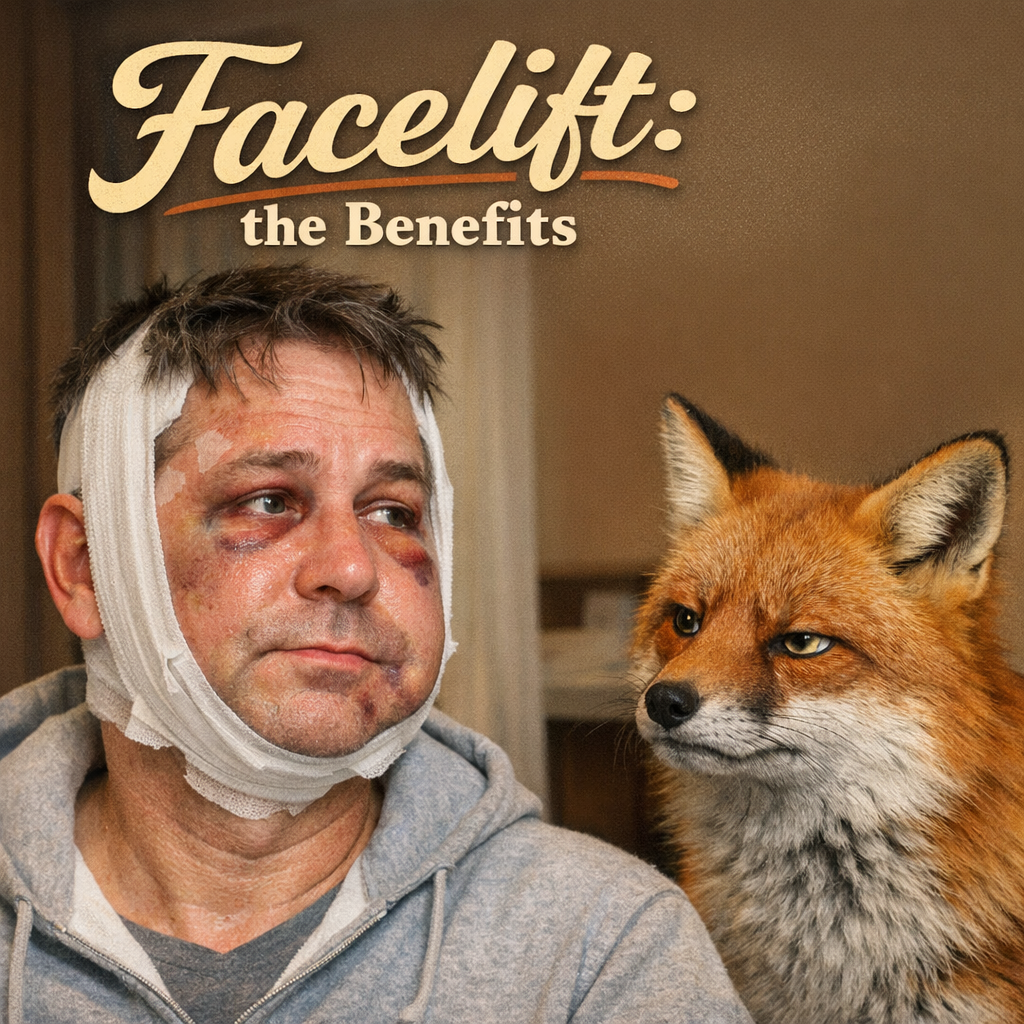
❌ The Recovery Is Not Cute
The Cleveland Clinic outlines a recovery process involving swelling, bruising, tightness, and weeks of downtime.
❌ It Doesn’t Fix Everything
A facelift won’t fix:
- Fine lines
- Sun damage
- Pigmentation
- Skin texture
These require lasers, peels, or skincare (ABCS).
The Cost: From Reasonable to Ridiculous
🇺🇸 United States
The American Board of Cosmetic Surgery (ABCS) and ASPS report:
- Typical total cost: $15,000–$40,000+
- National average surgeon’s fee: ~$11,395 (ASPS)
- Most expensive markets:
- New York City
- Los Angeles / Beverly Hills
- More affordable regions:
- South
- Midwest
- Parts of Texas and Florida
Other Countries (Medical Tourism)
According to the Medical Tourism Association, facelifts abroad are often 40–70% cheaper:
- Mexico: $3,300–$13,000
- Turkey: $1,500–$10,500
- Thailand: $1,500–$12,000
But cheaper doesn’t always mean better — and follow‑up care becomes complicated.
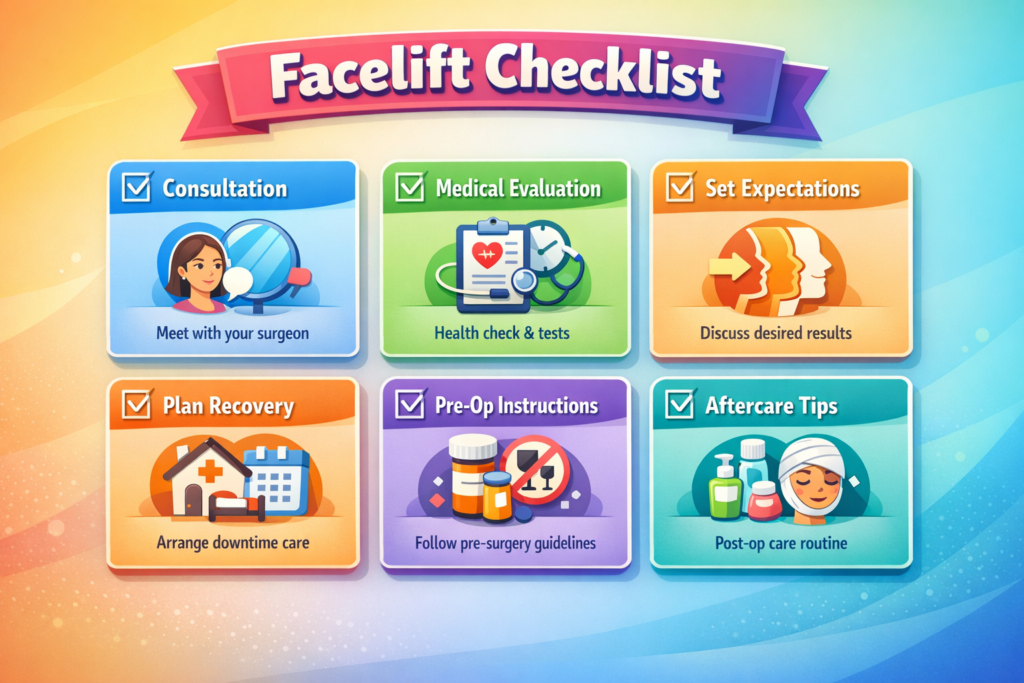
The Recovery Timeline (Honest Version)
The Mayo Clinic and Cleveland Clinic outline a consistent recovery pattern:
Days 1–3:
Peak swelling, bruising, tightness, drains, and compression dressings.
Days 4–7:
Bruising spreads downward, swelling still intense.
Week 2:
Major improvement; return to desk work.
Weeks 3–4:
Most bruising gone; swelling continues to fade.
Weeks 4–6:
You look socially normal; full exercise allowed.
Months 2–3:
Final contours appear.
Months 3–12:
Scars fade, numbness resolves, results refine.
This is why people say:
“It’s worth it… But it’s a lot.”
The Celebrity Factor: The Open Secret
The American Academy of Facial Plastic and Reconstructive Surgery (AAFPRS) reports that cosmetic procedures among celebrities and influencers continue to rise — but public admission remains low.
Why?
- They want to maintain the illusion of “effortless beauty.”
- Their brand depends on appearing ageless.
- Hollywood rewards youth but punishes obvious work.
- Admitting to surgery breaks the fantasy.
You can often tell anyway:
- A sharper jawline at 55 than at 35
- Neck magically smooth
- Mid‑face lifted without filler puffiness
- Slight changes around the ears
It’s not shade — it’s pattern recognition.
So… Should You Get a Facelift?
Here’s the honest answer:
Yes — if:
- You fully understand the risks (Mayo Clinic, ASPS)
- You can afford it
- You’re prepared for the recovery
- You want long‑lasting structural improvement
- You’re doing it for you, not for validation
No — if:
- You’re hoping it will fix your self‑esteem
- You’re afraid of surgery
- You don’t want weeks of downtime
- You’re expecting perfection
- You’re doing it because celebrities do
The real rule:
Do it at your own risk, with your eyes open, and with full acceptance of the suffering involved.
A facelift can be transformative — but it’s not a shortcut, and it’s not painless. It’s a commitment.
Final Thought
You don’t need a facelift to be magnetic, expressive, or memorable.
But if someone chooses to get one, that’s their path — and it deserves honesty, not shame.
What’s Next?
If this post lit a spark in your night, there’s more to come.
- Subscribe to receive gentle updates, moonlit guides, and soulful resources
- Share this post if it resonated
- Please comment below: Have you done a facelift? Are you planning on doing it? I’ll respond
Here’s to owning your space. Let your inbox be a place of possibility. Let your evenings bloom with intention.
With warmth,
Laureano Pires
The Thistlefox Corner

Appreciate the depth in this piece. For SRT/VTT captions and speaker labels, see Muse Voice Transcribe at . Muse Voice Transcribe